
Selecting the correct FRP storage tank capacity is one of the most important decisions when planning a storage system. Whether you need a tank for water storage, chemical storage, wastewater treatment, or industrial processes, choosing the right size ensures efficient operation, cost savings, and long-term reliability.
An undersized tank may lead to frequent refilling and operational disruptions, while an oversized tank can result in unnecessary costs and wasted space. Understanding your requirements is essential to selecting the ideal FRP storage tank capacity for your application.
In this guide, we’ll explain the key factors to consider when determining the best FRP storage tank capacity for your needs.
Why Choosing the Right FRP Storage Tank Capacity Matters
The right FRP storage tank capacity affects several aspects of your operations, including:
- Storage efficiency
- Operational reliability
- Maintenance requirements
- Installation costs
- Future expansion possibilities
- Overall project expenses
By selecting the correct tank size, businesses can optimize performance while reducing unnecessary costs.
Understanding FRP Storage Tanks
An FRP (Fiberglass Reinforced Plastic) tank is a durable and corrosion-resistant storage solution used in various industries. Because of their excellent strength and low maintenance requirements, FRP tanks are widely used for:
- Water storage
- Chemical storage
- Fuel storage
- Wastewater treatment
- Industrial process applications
Choosing the right FRP storage tank capacity ensures these systems operate efficiently for years.
Determine Your Storage Requirements
The first step in selecting the ideal FRP storage tank capacity is understanding how much liquid needs to be stored.
Ask yourself:
- How much liquid is consumed daily?
- Is the tank intended for short-term or long-term storage?
- Will demand increase in the future?
- Is emergency reserve capacity required?
Answering these questions helps determine the most suitable tank size.
Consider the Type of Application
Different applications require different FRP storage tank capacity levels.
Water Storage
Water tanks are commonly used for:
- Residential buildings
- Commercial facilities
- Hotels
- Hospitals
- Industrial plants
Water consumption rates will influence the required FRP storage tank capacity.
Chemical Storage
Chemical storage applications require careful capacity planning to ensure safe operation and compliance with industry standards.
Wastewater Treatment
Wastewater treatment facilities often require larger storage capacities to manage continuous flow and varying operational loads.
Industrial Processes
Manufacturing industries rely on properly sized tanks to maintain uninterrupted production.
Common FRP Storage Tank Capacities
FRP tanks are available in various sizes, including:
- 1,000 liters
- 2,000 liters
- 5,000 liters
- 10,000 liters
- 20,000 liters
- 50,000 liters
- 100,000 liters and above
Custom sizes are also available for specific industrial requirements.
Choosing the proper FRP storage tank capacity depends on the amount of liquid that needs to be stored and the available installation space.
Evaluate Available Space
Available installation space plays an important role when selecting an FRP storage tank capacity.
Consider:
- Floor area
- Height restrictions
- Accessibility for maintenance
- Future expansion needs
If horizontal space is limited, vertical tanks can provide higher storage capacity while occupying less ground area.
Account for Future Growth
Many businesses make the mistake of choosing a tank based only on current requirements.
However, future expansion should also be considered.
If your facility is expected to increase production or water demand, selecting a slightly larger FRP storage tank capacity can prevent expensive upgrades later.
Planning ahead helps maximize your investment.
Consider Daily Consumption Rates
Daily usage is another critical factor.
For example:
Small Commercial Buildings
Typical requirements:
- 1,000–5,000 liters
Residential Complexes
Typical requirements:
- 5,000–20,000 liters
Hotels and Hospitals
Typical requirements:
- 20,000–50,000 liters
Industrial Facilities
Typical requirements:
- 50,000 liters and above
These figures vary depending on the specific application and operational requirements.
Importance of Safety Margin
Experts recommend incorporating additional storage capacity to handle unexpected demand fluctuations.
Adding a safety margin provides:
- Emergency reserves
- Operational flexibility
- Reduced downtime
- Better system reliability
A properly planned FRP storage tank capacity ensures uninterrupted operations during peak demand periods.
Vertical vs Horizontal Tanks
The shape of the tank can also influence storage capacity and installation requirements.
Vertical FRP Tanks
Benefits include:
- Smaller footprint
- Higher storage volume
- Suitable for limited spaces
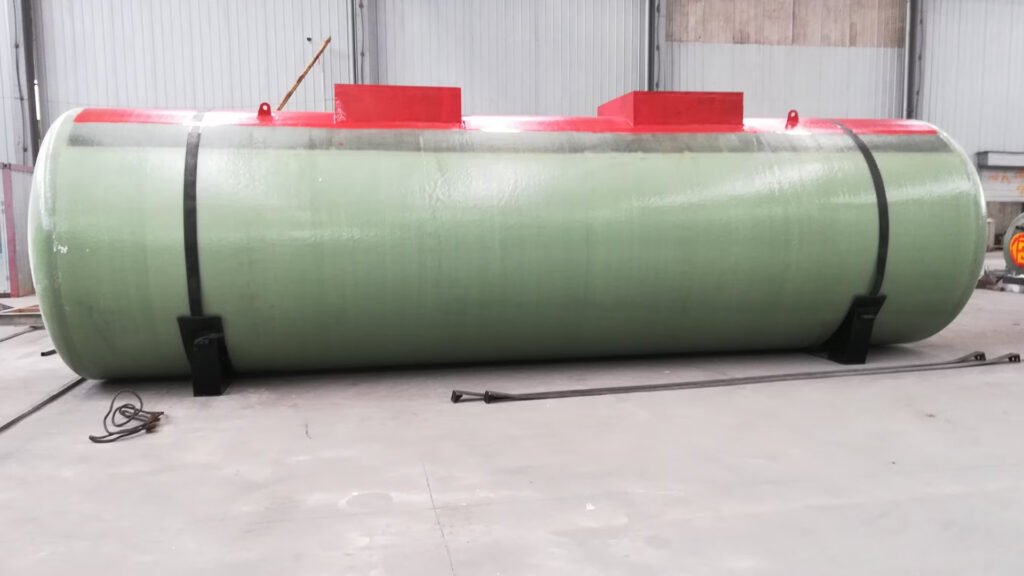
Horizontal FRP Tanks
Advantages include:
- Easier transportation
- Lower center of gravity
- Convenient access for maintenance
Both options are available in various FRP storage tank capacity configurations.
Why Custom FRP Storage Tank Capacity Matters
Standard tanks may not always meet industry requirements.
Custom-designed tanks provide:
- Specific dimensions
- Specialized nozzles
- Internal linings
- Additional accessories
- Enhanced performance
Custom solutions ensure the FRP storage tank capacity perfectly matches your operational needs.
Common Mistakes to Avoid
Choosing a Tank That Is Too Small
This can result in:
- Frequent refilling
- Production interruptions
- Increased operating costs
Selecting an Oversized Tank
An excessively large tank may lead to:
- Higher installation expenses
- Wasted space
- Unnecessary investment
Ignoring Future Expansion
Businesses should always plan for future growth when selecting an FRP storage tank capacity.
Why FRP Tanks Are the Preferred Choice
Industries across Saudi Arabia prefer FRP tanks because they offer:
- Excellent corrosion resistance
- Long service life
- Lightweight construction
- Low maintenance requirements
- High durability
- Custom capacity options
These advantages make an FRP storage tank capacity solution suitable for water, chemical, and industrial storage applications.
Conclusion
Choosing the correct FRP storage tank capacity is essential for ensuring efficient storage, minimizing operating costs, and supporting future growth. Factors such as daily consumption, application type, available space, and expansion plans should all be carefully evaluated before making a decision.
By investing in the right FRP storage tank capacity, businesses can achieve reliable performance, lower maintenance costs, and long-term value. Whether you need a water storage tank, chemical storage tank, or industrial storage solution, selecting the proper capacity is key to maximizing your investment.
frp-tank-manufacturer-in-madinah
Contact ASBAO Fiberglass
Looking for the ideal FRP storage tank capacity for your project?
ASBAO Fiberglass manufactures high-quality custom FRP storage tanks for water storage, chemical storage, wastewater treatment, and industrial applications throughout Saudi Arabia.
📍 Address
Abdullah Bin Al Shabab Road, Street No. 2,
As Sinaiyah District, Tarut, Qatif 32624, Dammam, Saudi Arabia
📞 Phone
+966 53 833 6912
+966 56 605 5170
📧 Email
info@asbaofiberglass.com
🌐 Website
www.asbaofiberglass.com